


- Make
Send Certnest events to Google Drive
Keep a record of each credential in a Drive folder.


When Certnest
Credential Issued fires
Then Google Drive
A record with the link saved to the course folder
Every credential is signed and can be checked by anyone
Guide
How Google Drive works with Certnest
When something happens to a credential in Certnest, our Zapier app starts a Zap, and Google Drive's Zapier app does "Create file in folder". Your team hears about it where it already works.
Who it is for
- Teams that work in Google Drive
- Training and events teams who want to know who opened, shared or bounced
- Anyone comfortable with a two-step Zap
What you need
- A Google Drive account
- A Zapier account (Zapier's own plan rules apply)
- A Certnest account, free plan included
- Connection
- Via Zapier
- How it connects
- Zapier, no code
- Set-up time
- About 10 minutes
- Category
- File storage
- Sends to
- Create file in folder
- Plans
- Every plan, including free
Step by step
Set up Google Drive
About 10 minutes, 8 steps
Step 1: Create an API key
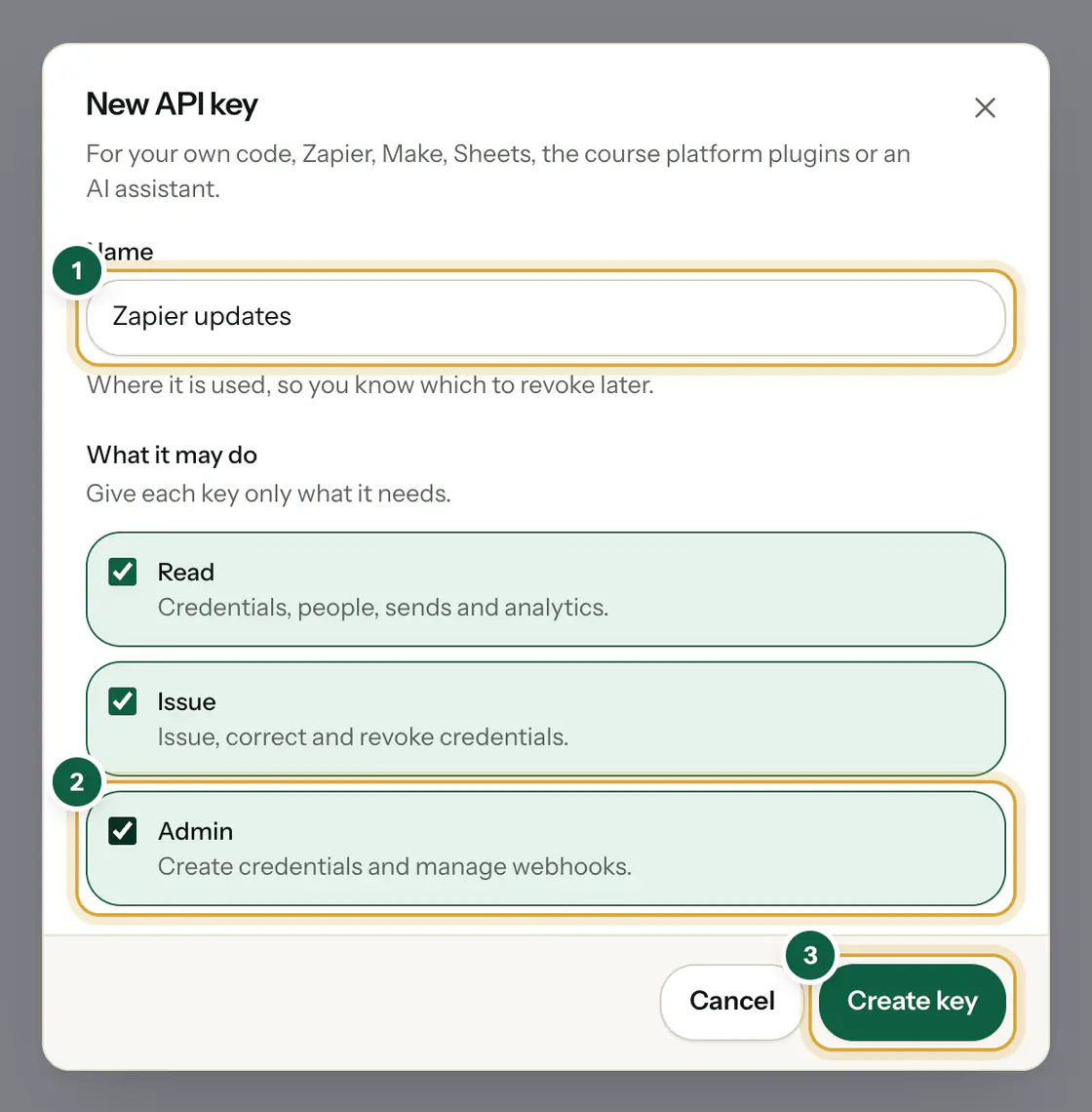
In Certnest, open Settings, API keys, New API key. Name it after where it will be used, such as "Zapier to Google Drive", and tick Read and Admin. Admin lets the connection add the webhook it listens on, and nothing else is needed. Then choose Create key.
Give each tool its own key. You can revoke one without touching the others.
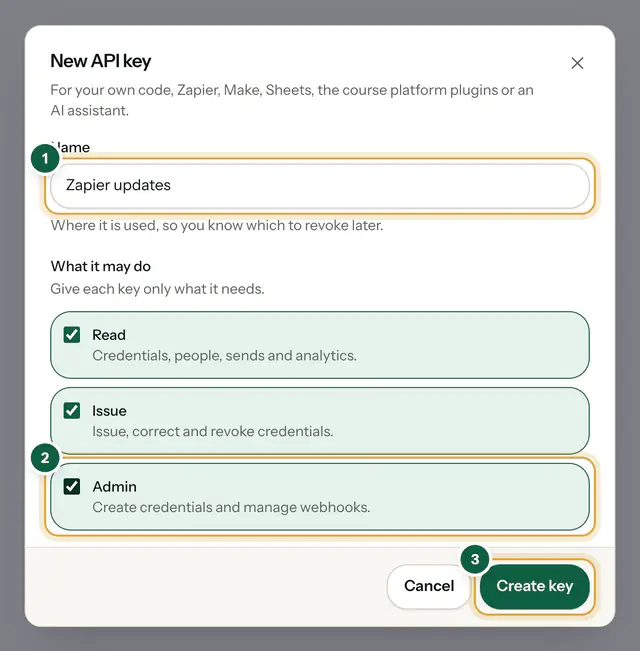
In Certnest. The New API key window in Certnest. 1: the key's name. 2: the Admin permission, ticked. 3: the Create key button. View full size Step 2: Copy the key now
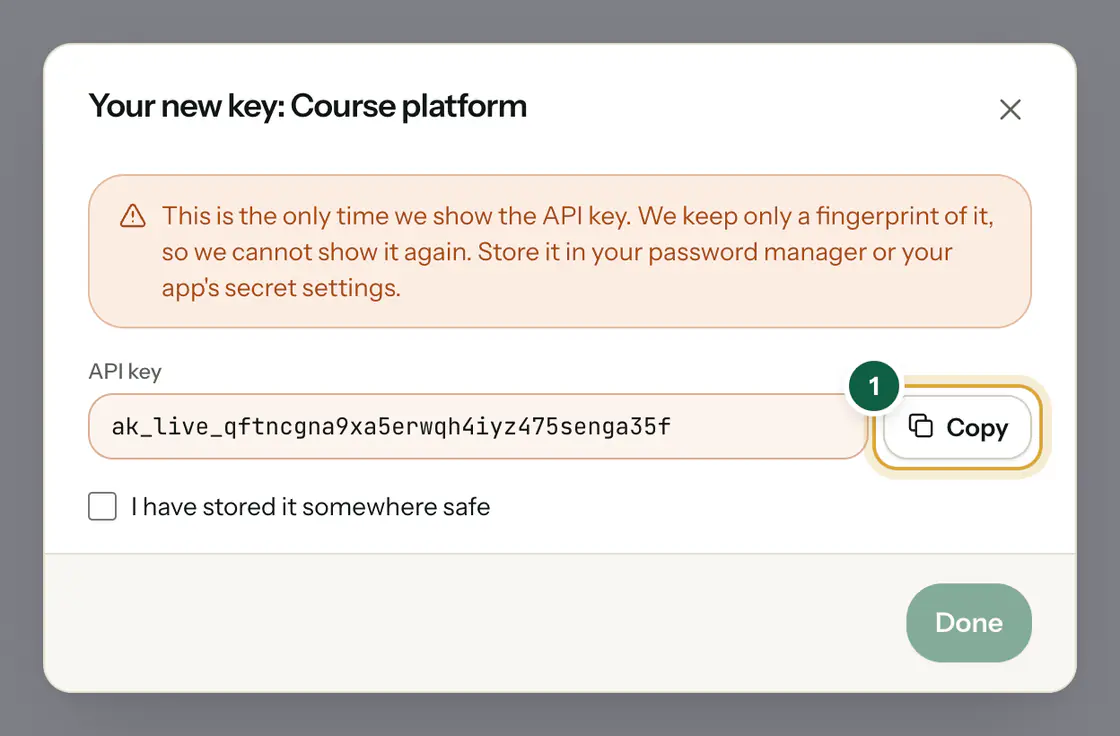
Certnest shows the key one time only and keeps just a fingerprint of it. Copy it into a password manager. If it is ever lost, rotate it in the same place and paste the new one.
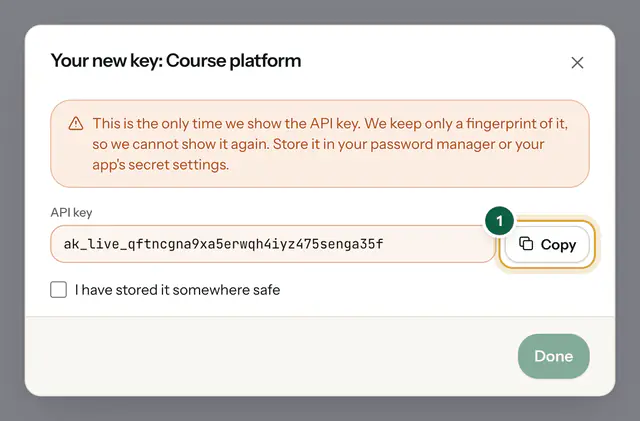
In Certnest. The window that shows a new API key once. 1: the Copy button. View full size Step 3: Start a Zap with a Certnest trigger
In Zapier, create a Zap and choose Certnest. Pick the event: Credential Issued, Credential Viewed, Added to LinkedIn or Email Bounced. Pick one credential to hear only about it, or leave it empty for all.
Drawing, not a screenshot. A drawing of a two-step automation. Step 1, highlighted: Certnest, Added to LinkedIn. Step 2: Google Drive. Step 4: Load a sample
Zapier loads recent real events from your account to map from. With none yet, it shows a sample with the same fields.
Step 5: Add Google Drive: Create file in folder
Add an action, choose Google Drive and "Create file in folder", and connect your Google Drive account.
Drawing, not a screenshot. A drawing of the same automation. Step 2, highlighted: Google Drive, Create file in folder. Step 6: Map the fields
Use Name, Email, Credential, Credential link, Status and When from the Certnest step to write the message or the record.
Drawing, not a screenshot. A drawing of Google Drive's fields filled from the Certnest event. Step 7: Publish the Zap
When the Zap turns on, Zapier adds a webhook in Certnest for that one event. You see it under Settings, Webhooks, and it goes away when the Zap is turned off.
Step 8: Try it
Issue one credential to yourself, open it and add it to LinkedIn. The update reaches Google Drive within seconds.


What happens next
What your team sees
Once it is on, Google Drive hears about every change, and you can see each delivery.
1 of 2
The update lands in Google Drive
Each time the event happens, Google Drive gets the person's name, the credential and its link, as you mapped them.
Drawing, not a screenshot. A drawing of the update arriving in Google Drive: a short note with a person's name and credential link. 2 of 2
Every delivery is logged
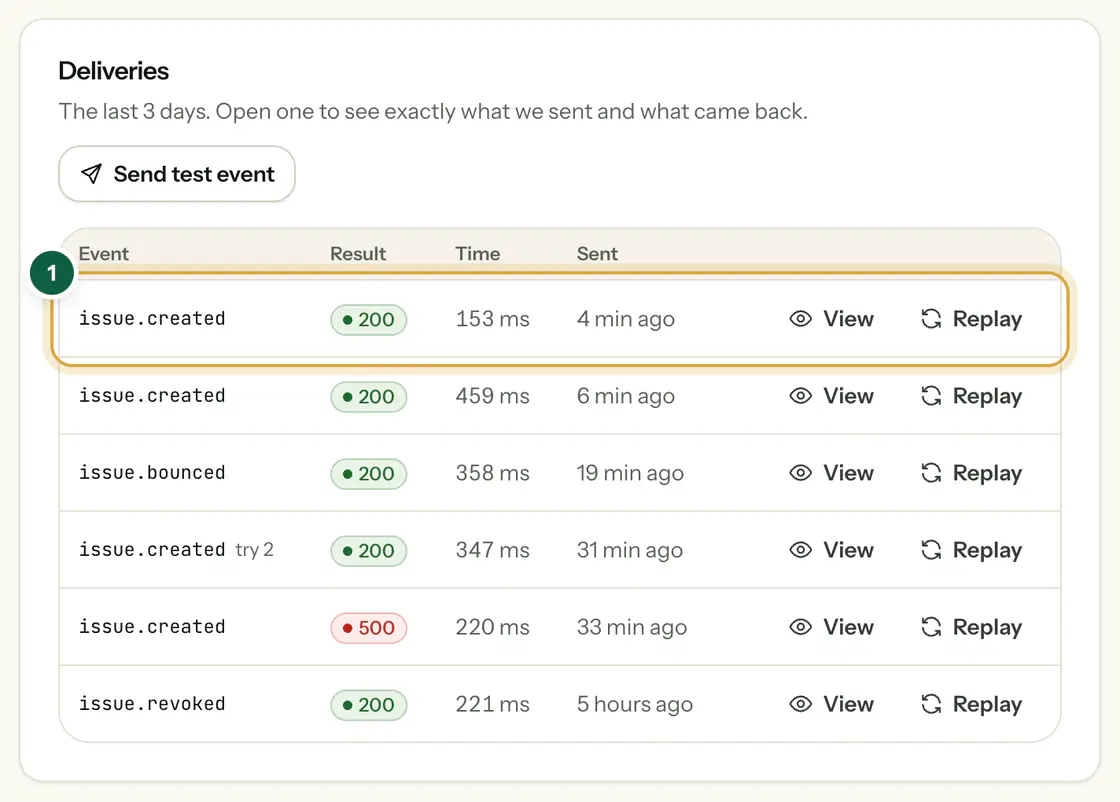
In Certnest, Settings, Webhooks shows each delivery with its answer and timing. A failed one is tried again for three days, and you can send any delivery again by hand.
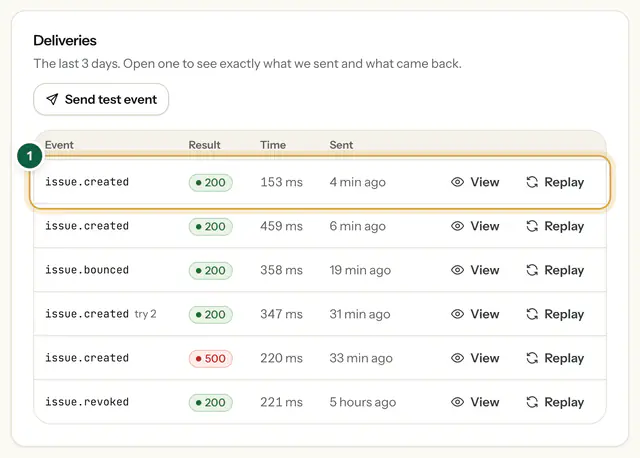
In Certnest. The webhook deliveries list in Certnest. 1: one delivery with its status code. View full size

Want to watch it happen? Try the interactive demo.
Ideas
What Certnest can tell Google Drive
Use Certnest's triggers in Zapier or Make to save a record of each credential, with its link, in Google Drive. Every credential also stays hosted and verifiable in Certnest.
When Certnest
Credential Issued fires
Then Google Drive
A record with the link saved to the course folder
When Certnest
A credential is revoked
Then Google Drive
A note added to the audit folder
When Certnest
A send finishes
Then Google Drive
A summary file for the term
Troubleshooting
If something does not work
The run log and People and sends show what happened to each person. These are the usual fixes.
Zapier says it cannot subscribe
The key needs the Admin permission to add a webhook. Make a key with Read and Admin and reconnect.
Nothing arrives after I turned the Zap on
Check Settings, Webhooks in Certnest. If the endpoint shows Failing, open a delivery to see Zapier's answer. If it is missing, turn the Zap off and on again.
I get updates for every credential
Edit the trigger and pick one credential, or add a Zapier Filter on the Credential field.
The key stopped working
Someone may have rotated or revoked it. Open Settings, API keys, see when each key was last used, make a new one and paste it where the old one was.
Google Drive questions
How does Google Drive connect to Certnest?
Through Zapier. Google Drive has its own Zapier app, and so does Certnest, so you connect the two without code.
Does the Google Drive integration cost extra?
Integrations, the API and webhooks are on every Certnest plan, including the free plan with 1,000 credentials a year. Zapier or Make may charge for their own plans.
Can it issue the same person twice by mistake?
No. Every call carries an ID or a retry key. Someone who already holds a live copy of the credential gets the same one back, and is not emailed again.
Is Certnest partnered with Google Drive?
No. Certnest connects to Google Drive through its public features. Google Drive is a trademark of its owner, and this page does not mean they endorse Certnest.
Related
Works well with
Zapier
NativeConnect Certnest to thousands of apps with triggers, actions and a search.
Dropbox
Via ZapierSave credential records to Dropbox folders.
- Make
OneDrive
Via ZapierKeep credential records in OneDrive or SharePoint.
- Make
Box
Via ZapierStore credential records in Box.
- Make
Google Sheets
NativeIssue a credential for each row, and get the link and status written back.
Google Forms
NativeSend a credential when someone submits the form and passes your rule.


All trademarks belong to their owners. Certnest is not affiliated with them unless stated. Logos from Simple Icons (CC0) where available.
Start issuing from Google Drive
Free for your first 1,000 credentials a year. No card needed.